Our story
We saw waste.
We chose to build.
CRCL is OPUS Design Atelier's answer to a quiet tragedy: engineering plastics from e-waste, discarded across Pokhara, while the city imports the furniture and interiors it could be making from its own streets.
It started with something we couldn't unsee
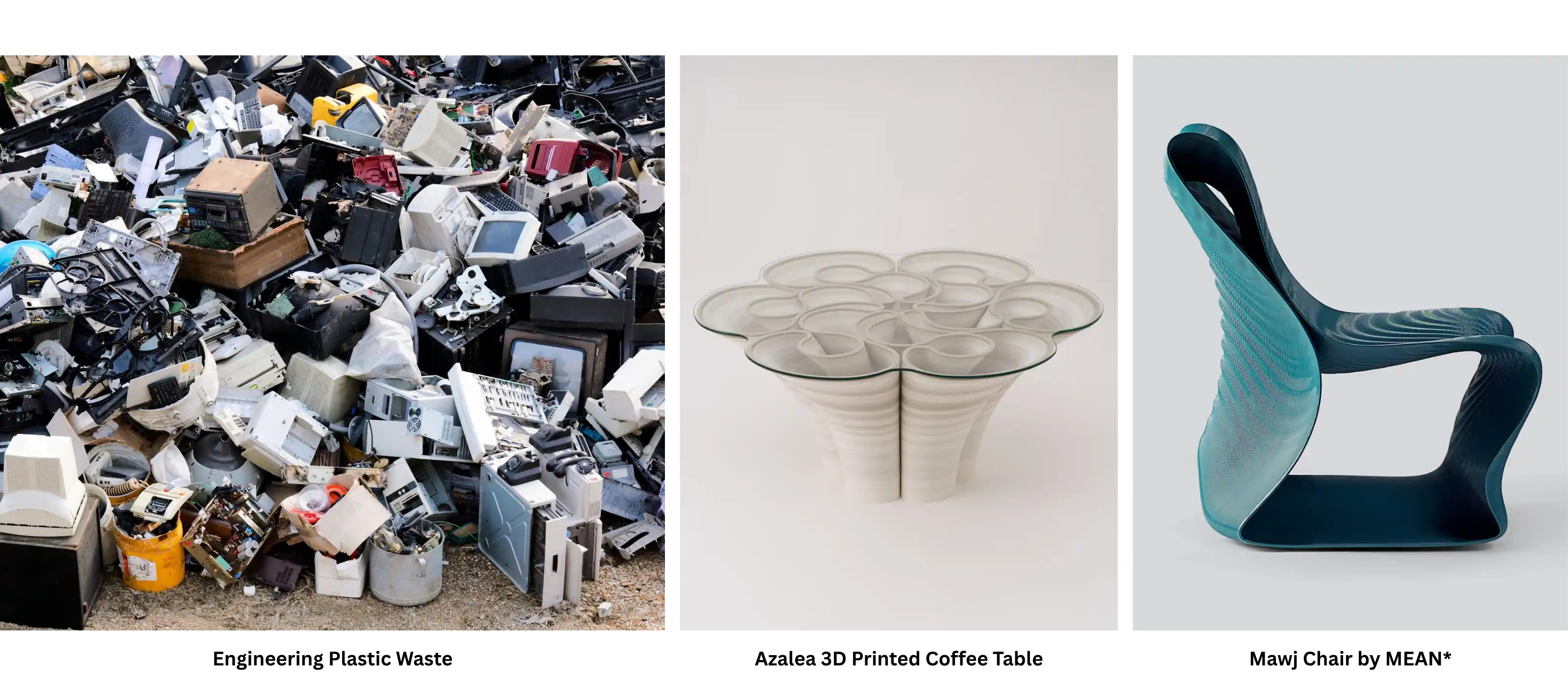
Walk through any scrap yard in Pokhara and you will find it: casings from old TVs, printer bodies, keyboard shells, appliance housings. Engineering plastics like ABS, polycarbonate, and HIPS pile up as if they were worthless.
They are not worthless. But in Nepal’s recycling landscape, almost all attention goes to bottle-grade PET and PE. The harder, stronger plastics from electronics are mixed, downcycled, burned, or buried. We kept asking ourselves: how can material this capable end up as waste?
CRCL began there. Not as a business plan, but as a refusal to accept that the city we live in should throw away what it could build with.
The plastics nobody wanted
We spoke with local recyclers. The answer was always the same: there is no buyer for ABS and PC. Without demand, there is no incentive to separate, clean, or process these streams properly.
So the material sits. Or worse, it disappears into low-value outlets that waste its potential. Meanwhile, cafes along Lakeside renovate. Hotels replace furniture. New spaces open every season, often filling with imported pieces that carry no story and leave no value behind in Nepal.
That gap hurt to watch. On one side, plastic with real structural life left in it. On the other, a city hungry for distinctive, durable design. CRCL is the bridge we decided to build.
Why Pokhara, why now
Pokhara is not just where we work. It is where this material is discarded and where people would actually see the result. Tourism brings global eyes to local spaces. A chair in a lakeside café is not only furniture; it is a statement about what this city chooses to make.
We are motivated by the idea that a visitor could sit on something born from local waste and understand that Nepal is capable of circular manufacturing. Not someday, but here, in production, now.
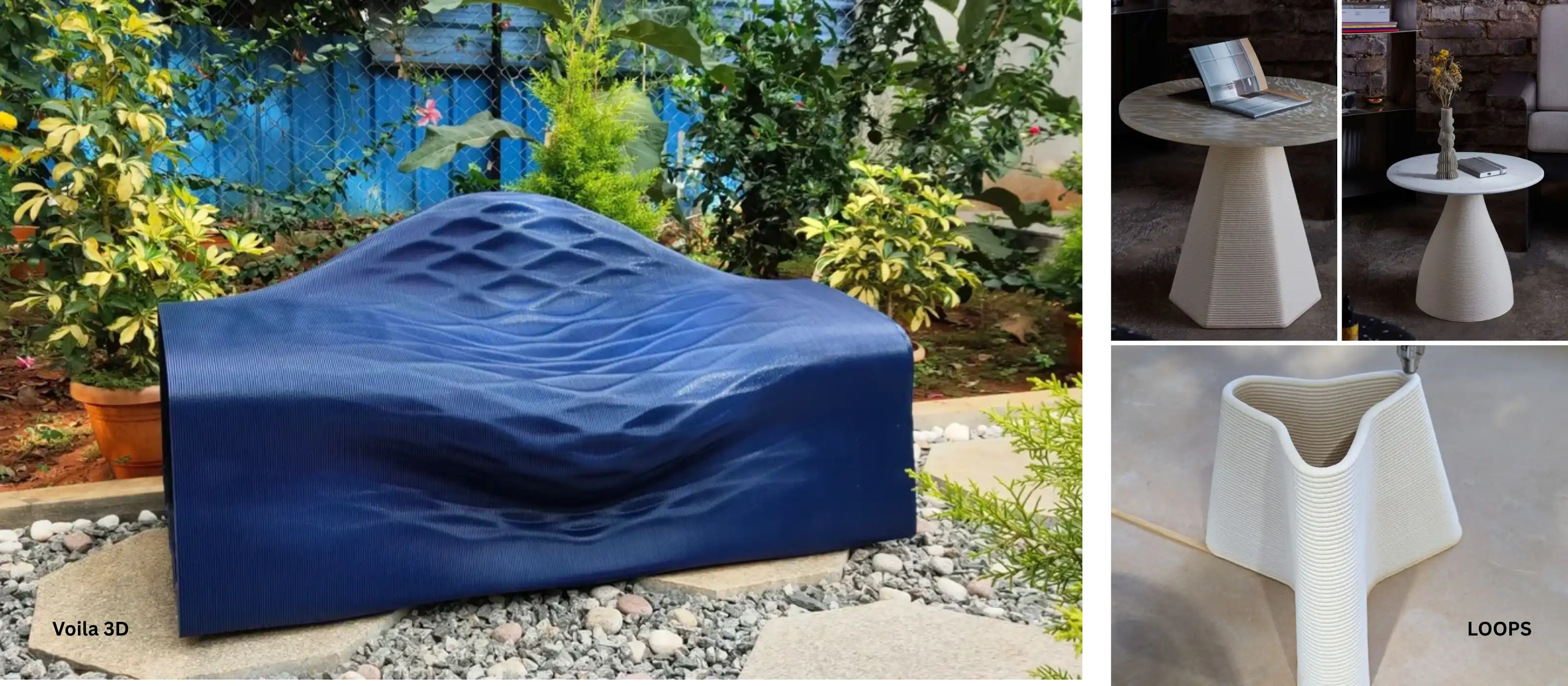
Large-format 3D printing lets us shape forms that conventional tooling cannot easily reach. Custom interiors, sculptural benches, planters, architectural details, all from material that was already in our streets.
From waste to something you can touch
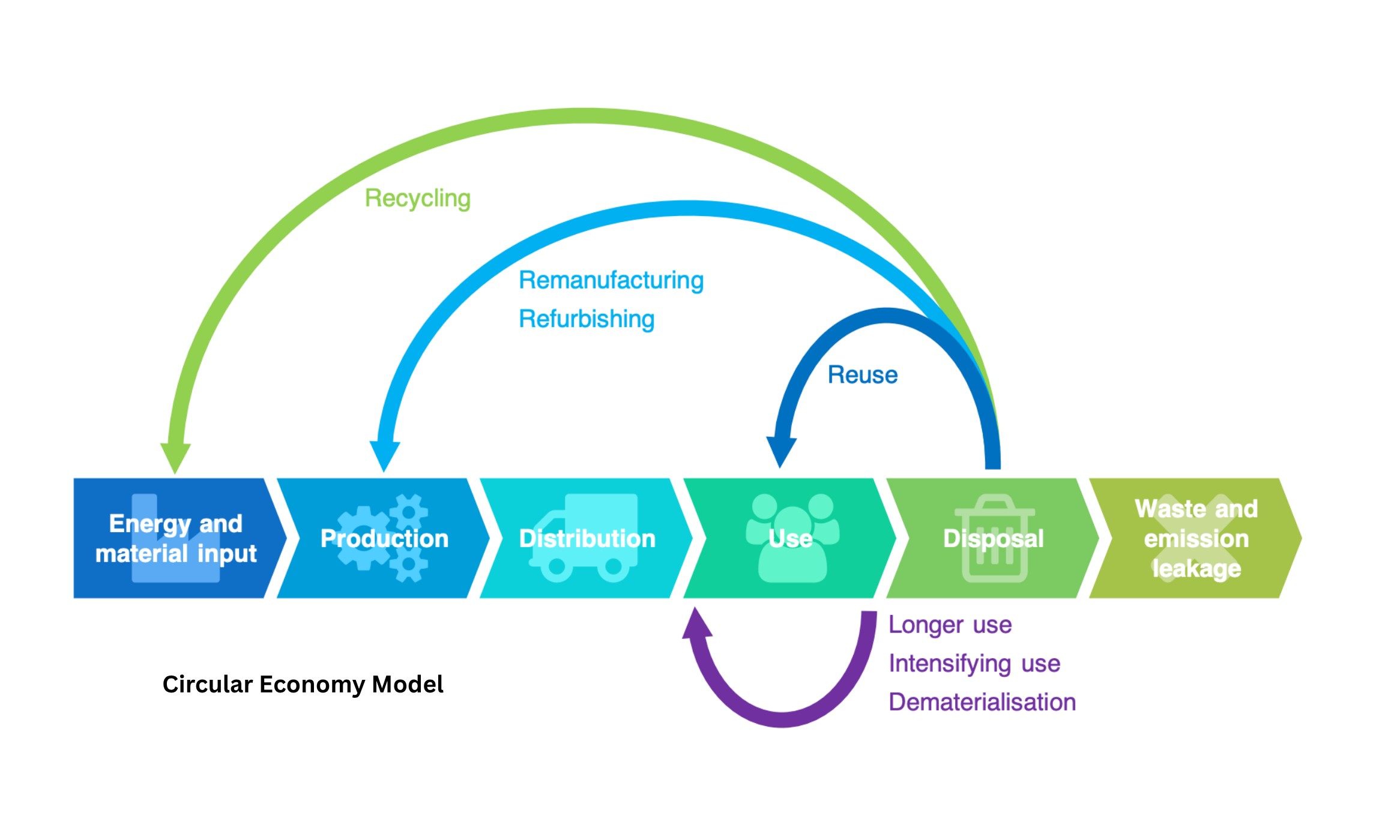
This is not recycling as an abstract idea. It is collection through scrap networks and e-waste channels. Sorting. Cleaning. Shredding and pelletizing. Then printing, layer by layer, into objects meant to be used, not displayed as guilt.
We are building a closed loop: waste in, product out, and when a piece reaches the end of its life, the material can return. That is what circular means to us. Not a label on a brochure. A responsibility baked into every design decision.
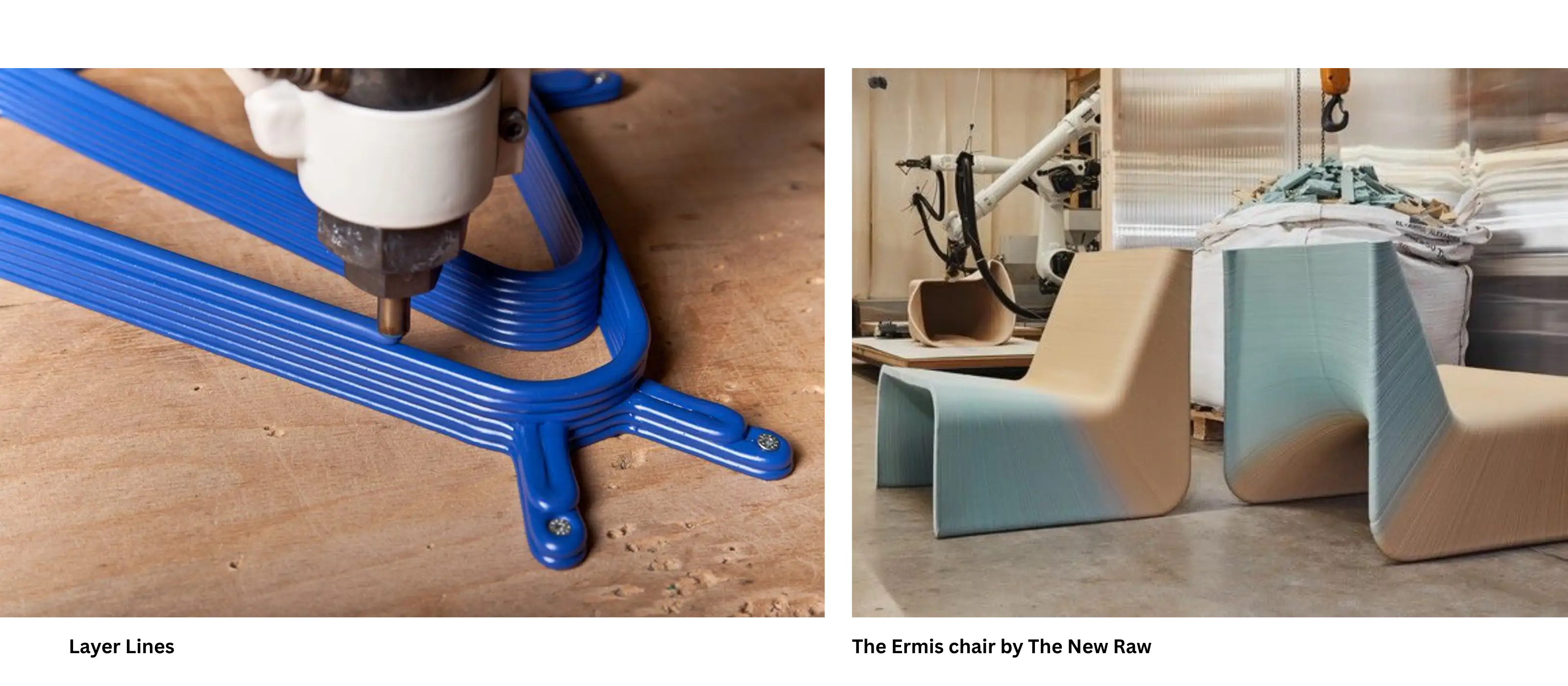
Every layer line on a printed surface is visible proof that something discarded became something deliberate.
Material with memory
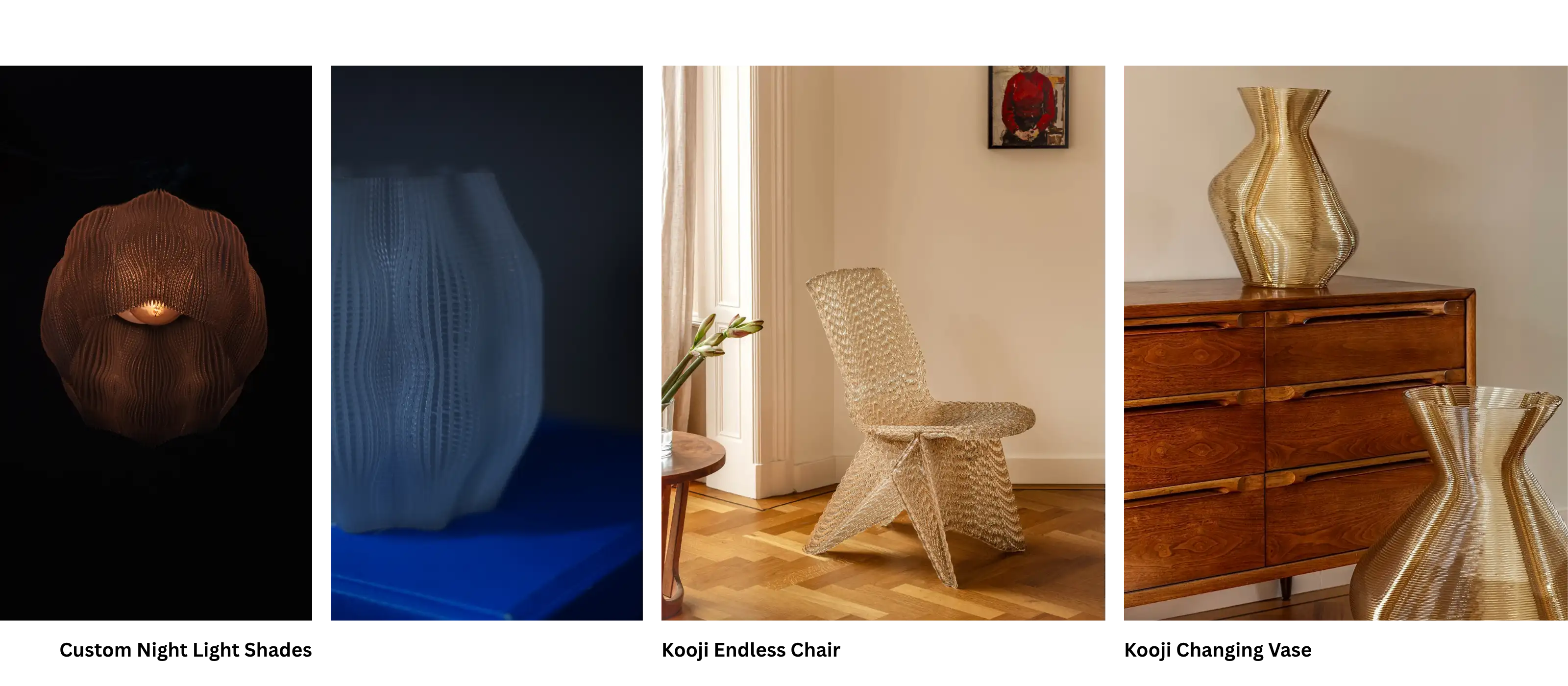
Recycled engineering plastics can be tuned, blended with virgin material when needed, and adjusted for strength, weight, and finish. A translucent PET piece catches light differently from a solid ABS bench. Each application asks for honesty about what the material can do.
We do not pretend waste becomes perfect on its own. We engineer it through geometry, infill, orientation, and care until it earns its place in a room, a terrace, a public space.
There is something deeply motivating about holding a finished object and knowing the raw cost was almost nothing, but the value to a business, to a city, to the person who sits on it, can be real.
Built by people who make machines
CRCL is not only a design studio. We come from machine building: large-format CNC, fabrication, production-level thinking. We evaluated industrial robotic systems, commercial pellet printers, and custom builds. What matters is not the most impressive machine on paper, but the one that can actually run here, be repaired here, and grow with demand.
Printer development and material sourcing move in parallel because waiting for perfect conditions means more plastic lost. Partners like Himalayan Life Plastics are already capable of pelletizing waste engineering plastics, but they need guaranteed buyers. We intend to be that buyer, and eventually, to bring more of the process in-house, creating more local jobs.
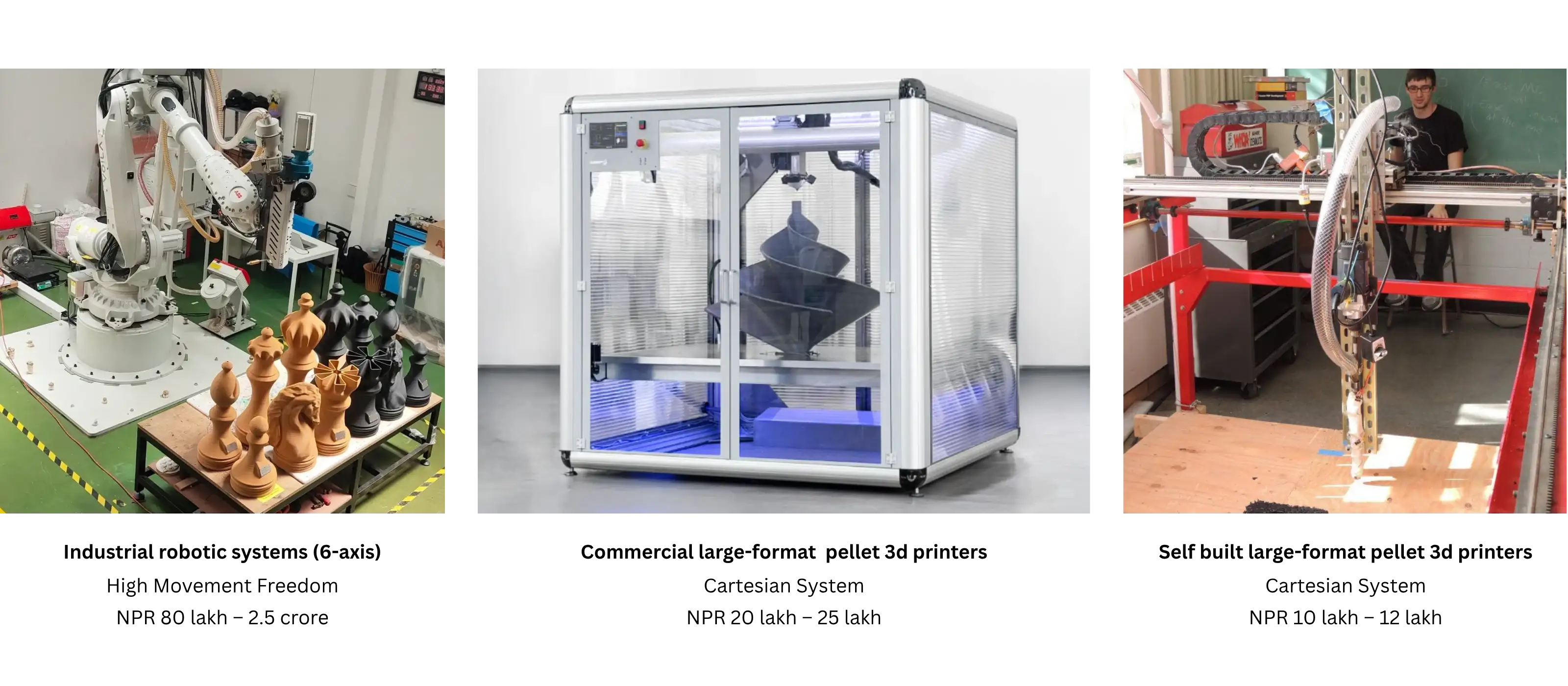
What we are working toward
Less plastic to landfill and open burning. Longer life for engineering polymers. Manufacturing that stays in Pokhara, using Pokhara’s waste, employing Pokhara’s hands.
We want to see unique furniture in Nepali spaces that visitors remember, not because of a sustainability sticker, but because the object itself tells a true story.
That story is still being written. We are looking for collaborators, spaces to fabricate, market connections, and people who believe local waste can become local pride.
This is what we're making from it.
Nothing we make is meant to be the end of the line. Every product is designed to last, and to come back.